
Life Cafe: Family Edition
Weekly Meeting Framework
(with Attention & Trigger Considerations)
Concept: The Life Cafe: Family Edition is a dedicated space for open conversation and exploration of topics related to living a fulfilling and healthy life, specifically within the context of family dynamics. Here, we encourage respectful communication and active listening while acknowledging attention challenges and potential triggers.
Meeting Goals:
- Strengthen family bonds and build a supportive community.
- Explore and discuss personal development, health & wellness, goal achievement, and positive relationships within the family.
- Learn and share life experiences, wisdom, and insights with each other.
- Create a safe space for open conversations about challenging family topics, using respectful language and acknowledging triggers.
Meeting Structure (Estimated Time: 2 hours)
Pre-Meeting Check-In (5 minutes):
- Before introductions, dedicate a few minutes to a mood and receptiveness check-in via chat.
- Provide a list of pre-written options for participants to choose from, along with space for them to add their own comments (if comfortable). Examples:
- “I’m open to discussing any topics tonight.”
- “I feel more like listening for now, but may participate later.”
- “I have space to listen and offer feedback.”
- “I’d like to focus on [specific topic] tonight (if relevant).”
Welcome & Introductions (10 minutes)
- Briefly introduce the Life Cafe: Family Edition concept and meeting goals.
- Icebreaker activity to encourage connections and build a rapport, focusing on strengths and positive experiences (e.g., share one thing you admire about a family member).
Topic Exploration (60 minutes)
- Pre-selected Topic (2 weeks prior): Choose a specific theme related to enriching family life, considering both growth and sensitivity (e.g., expressing emotions constructively, managing conflict respectfully, fostering empathy, building healthy boundaries).
- Briefly introduce the topic and any discussion prompts focusing on positive communication strategies from the language bank (e.g., “I statements” or active listening techniques).
- Encourage open discussion, emphasizing respectful language and clarifying questions.
- Pause for check-ins throughout the discussion. Ask if anyone feels overwhelmed or triggered by a topic and offer redirection or a short break if needed.
Guest Speakers (Optional – 30 minutes)
- If a guest speaker is invited, introduce them and their area of expertise related to the chosen theme, focusing on positive communication strategies for families.
- Allow the speaker to present their insights for 15-20 minutes, followed by a dedicated Q&A session emphasizing respectful questions.
Sharing & Learning (45 minutes)
- Activity: Guided reflection prompt or journaling exercise related to the discussed topics, focusing on family dynamics and incorporating language bank strategies (e.g., “How can I use ‘I statements’ to express my feelings in a family situation?”). (10 minutes)
- Open Sharing: Family members can share personal experiences, insights, or questions related to the discussion, using respectful language and acknowledging triggers. If someone feels uncomfortable with a topic, offer alternative ways to participate (e.g., writing on a notecard). (35 minutes)
Closing & Wrap-up (15 minutes)
- Briefly summarize key takeaways or insights from the discussion, focusing on positive communication strategies.
- Announce next week’s topic (if pre-selected).
- Express appreciation for participation and acknowledge the effort towards respectful communication.
Additional Considerations:
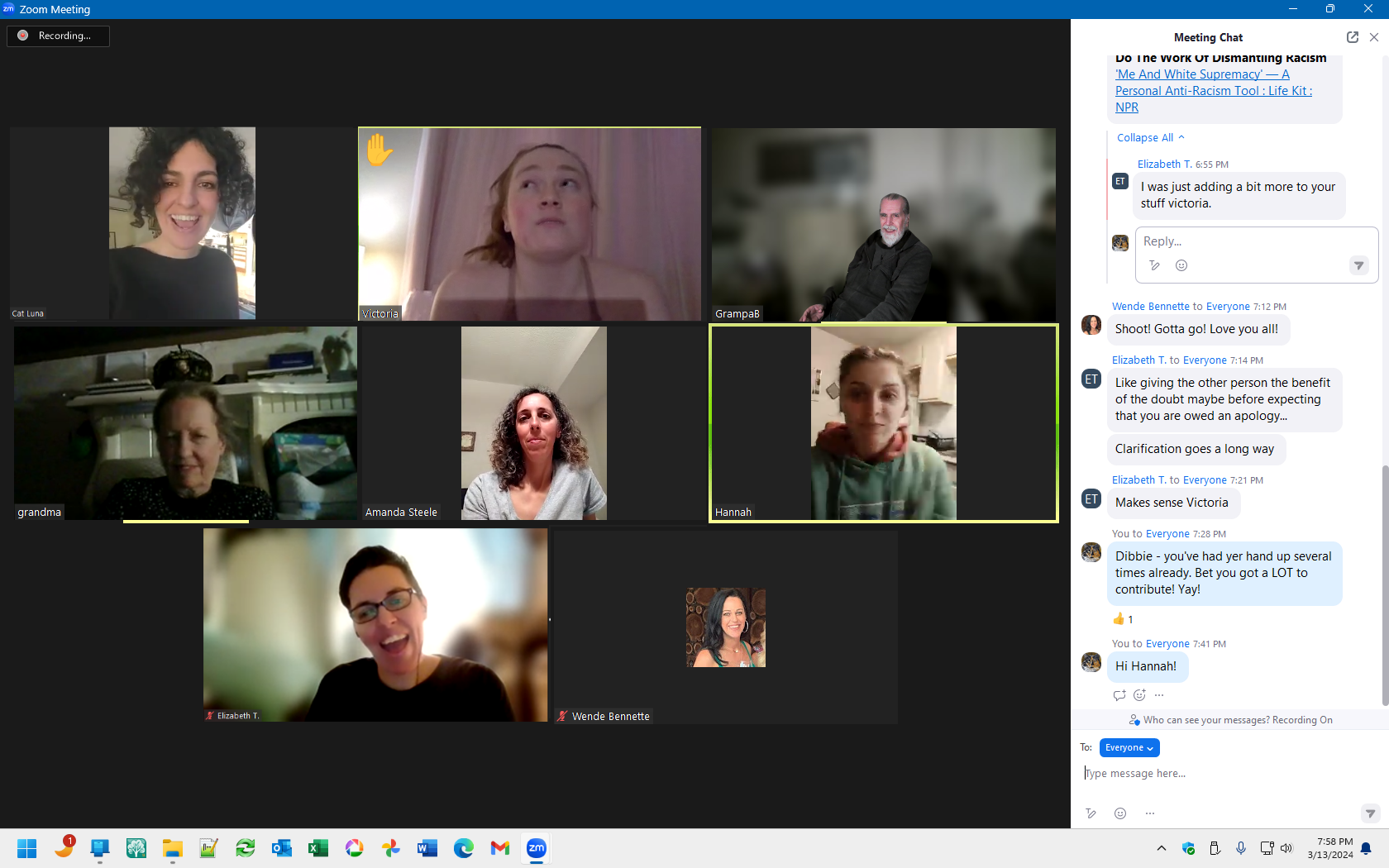
- Consent to Record: At the beginning of each meeting, obtain verbal consent from all participants for recording purposes.
- Facilitator: Consider having a rotating family member facilitate the discussion, managing the icebreaker, flow of conversation, check-ins for triggers, and pre-meeting check-in via chat.
- Ground Rules: Establish ground rules for respectful communication, Confidentiality, active listening, and acknowledging triggers at the beginning of each meeting.
- Resources: Share relevant resources (books, articles, websites) related to the discussed topics and communication strategies after each meeting.
- Language Bank Resources: Keep a visible list of language bank strategies in the meeting space for easy reference.
General Life Cafe Framework
- Set Ground Rules & Create a Welcoming Environment
- This is an open discussion forum where each participant is encouraged to speak freely.
- There are no hierarchies, and everyone should be treated equally.
- Show respect to everyone while they speak, whether you agree with them or not.
- Clarifying questions are very welcome and encouraged.
- Listen to one another in good faith. Do not make assumptions.
- Respect everyone’s views. Don’t be judgmental. Everyone attends for a reason. You may think you know why they are there – but that could be incorrect.
General Life Cafe Concept
- In contrast to a Death Cafe, a Life Cafe is a place where people gather to celebrate life and discuss topics related to living fully and healthily.
- Conversations in a Life Cafe revolve around personal development, health and wellness, achieving goals, cultivating positive relationships, and other aspects of leading a fulfilling and meaningful life.
- It could also be a place to share and learn from each other’s life experiences, wisdom, and insights.
- Just as a Death Cafe encourages open conversation about a topic that is often considered taboo, a Life Cafe encourages open conversation about topics that people often find challenging to discuss, such as personal growth, mental health, and life’s purpose.
Overview of Rules
- All participating in Life Cafe consent to following the guidelines built within this space.
- We will all do our very best to respect one another by being judgment-free and willing to listen actively to those who participate.
- Anything shared outside of Life Cafe, such as documents, must be done willingly and with knowledge—DO NOT SHARE PERSONAL DOCS WITHOUT CONSENT.
- All participants agree to share this space drug and alcohol-free. This is a sober zone. We all encourage everyone who wants to collaborate and connect to do so with a clear mind and open heart. Consent can only be considered full and intentional when you have control over your thoughts and feelings. The nature of being under the influence can cloud emotions and thoughts and can have negative impacts on all those involved. In the effort to create this beautiful safe space, we all agree that we are doing so freely and with clear intentions – drug and alcohol-free.
We refuse to admit anyone who comes to a Life Cafe intoxicated.